
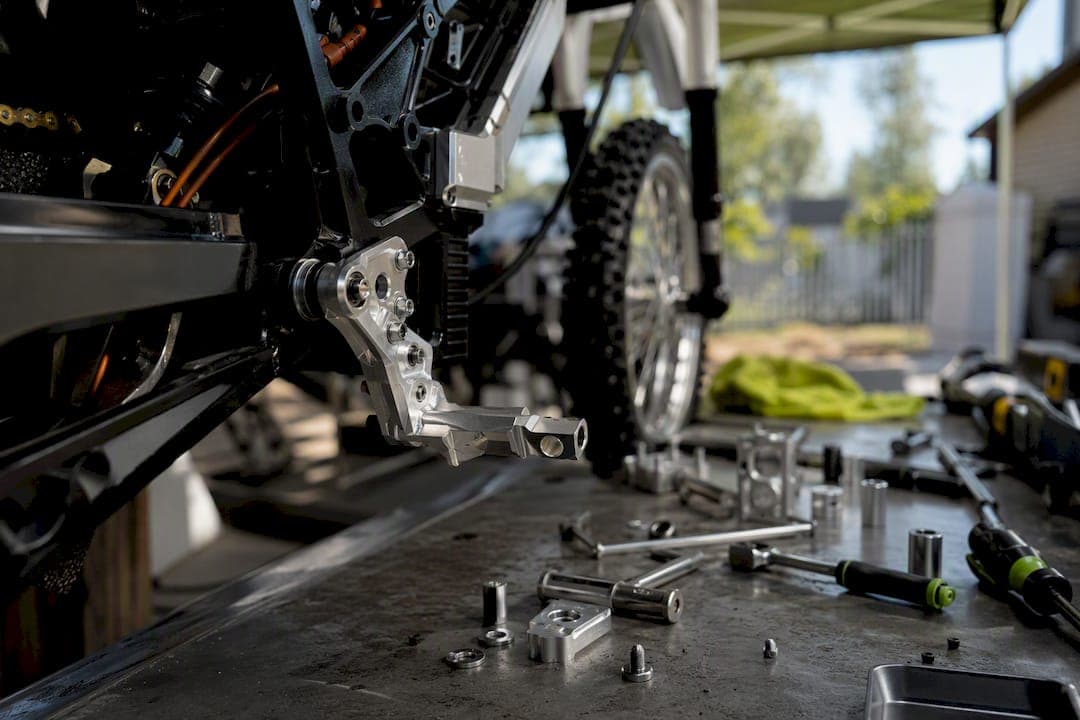
The engineering of a kickstand comes down to a handful of trade-offs done well: stability versus weight, easy retention versus low deployment force, and durability versus mechanical complexity. Get the geometry wrong and the bike falls over; get the mechanism wrong and it rattles loose or seizes with grit. The rest of this piece walks through mechanisms, materials, stability math, mounting, testing, and a few genuinely clever patented designs worth studying.
TL;DR:
- Proper placement of the kickstand's pivot is crucial to avoid interference with pedals, ground strike, or altered handling characteristics.
- Steel is preferable for durability at pivot points, while aluminum can reduce weight but may require anodized finish for outdoor resistance.
- Sealed bearings and proper tolerances at the pivot extend the stand’s lifespan by resisting dirt ingress and reducing wobble.
- Stability depends on the bike’s center of gravity projecting inside the support polygon, especially on slopes or uneven ground.
- Deploying the stand with a smooth force and providing tactile feedback helps ensure rider confidence and prevents the stand from dragging or failing to stay engaged.
What Are the Types and Functional Roles of Kickstands?
A kickstand's job changes with its topology. Side stands pivot from one point near the rear dropout or bottom bracket and lean the bike at an angle, relying on the front wheel's slight steering offset for lateral stability. Center stands (and their two-leg cousins) lift the rear wheel off the ground entirely, planting the bike upright with a wider footprint. Motorcycle pivot stands borrow from both worlds but carry far higher loads and usually integrate a return spring strong enough to overcome the added mass of an engine and fuel tank.
Encyclopedic references note this same three-way split. Kickstands are commonly grouped into side, center or two-leg, and motorcycle pivot types, each with its own installation quirks.
The practical fallout of choosing wrong shows up fast:
- Side stands mounted too far forward create crank or pedal interference on pedal-powered bikes.
- Center stands add rotational mass low on the frame, which changes how the bike feels when leaned into a turn.
- Motorcycle stands need enough leverage to lift real weight, so pivot placement and arm length matter more than on a bicycle.
- Cargo bikes often need two-leg stands because a single point of contact can't support an asymmetric load without tipping.
Sheldon Brown's practical notes flag frame compatibility and crank clearance as the two most common installation headaches, a lesson that holds whether you're bolting a stand to a road frame or a small electric dirt bike.
How Do Springs, Detents, Latches, and Dampers Work Together?
Every kickstand mechanism is really four sub-problems stacked on top of each other: what holds it up, what holds it down, what stops it from bouncing, and what keeps the pivot from wearing out early.
- Springs. Torsion springs mounted coaxially with the pivot are the default choice because they store energy compactly and resist fatigue better than extension springs bolted off-axis. Sizing one conceptually means working out the moment arm from pivot to ground contact, then choosing preload so the stand snaps fully open or closed rather than stalling halfway.
- Detents. Ball-plunger mechanisms seat into machined recesses to hold the stand at defined raised and lowered positions. Patent filings on kickstand hardware describe carrier blocks and spring-loaded ball detents that lock the support arm in place while reducing stress transferred to the housing itself.
- Latches and cam geometry. A well-shaped cam lets a rider unlatch the stand with a light foot tap instead of fighting spring preload directly, which matters more than it sounds on heavier bikes.
- Dampers. Rotary dampers slow the return stroke so the stand doesn't slam, but they introduce a sealed component exposed to weather.
Pro Tip: Skip gas springs on anything that lives outdoors. Engineering forum discussions on kickstand mechanisms consistently warn that gas springs and sealed actuators fail faster than torsion springs once grit and moisture get into the seal.
Which Materials and Finishes Hold Up Best on a Kickstand?
Steel and aluminum solve different halves of the same problem. Steel wins where the pivot sees repeated wear, since it resists galling and deformation under cyclic loading better than most aluminum alloys. Aluminum wins where weight matters, particularly on a lightweight or electric bike where every gram at the lowest point of the frame affects handling.
Manufacturing method matters as much as the raw material choice:
- Stamped or forged steel arms are cheap at high volume but expensive to tool for short runs.
- CNC-machined aluminum or steel parts skip tooling costs entirely, which makes far more sense for prototypes and limited production.
- Fixture design and hole tolerance on the pivot bore drive whether the finished part wobbles or locks in tight, regardless of material.
Finish choice decides how long the part survives outdoors. Zinc plating is the low-cost baseline; hardcoat anodize on aluminum adds real wear resistance at the pivot surface, and anodize thickness specs directly affect how a machined kickstand ages in mud, salt, and UV exposure.
How Do You Analyze Kickstand Stability and Load?
Stability boils down to one question: does the bike's center of gravity project inside the support polygon formed by the kickstand foot and the tire contact patches? If it does, the bike stays upright. If it doesn't, no spring or detent will save it.
- Locate the center of gravity. Rider weight, cargo, and bike mass combine into one point, which shifts noticeably with a loaded pannier or a passenger.
- Project that point straight down. If it lands outside the triangle drawn between the kickstand foot and the two tire contact points, the bike tips.
- Estimate reaction forces at the kickstand foot. A shallower kickstand angle increases the vertical load the foot carries; a steeper angle increases the lateral force trying to fold the stand back up.
- Size the pivot and spring preload for worst-case conditions, not average ones. That means loaded panniers, a bike parked on a slope, and soft or uneven ground, not a flat garage floor.
Stability Callout: A support polygon that's even a few degrees narrower than expected can put the projected center of gravity outside the safe zone on a slope, which is why worst-case slope angle, not flat-ground testing, is what separates a kickstand that holds from one that doesn't.
What Mounting and Wear Points Matter Most?
Two mounting philosophies dominate: a bracket clamped or bolted to the frame, or a pivot integral to a frame lug. Brackets are more forgiving to retrofit but concentrate load at a few bolt points, so a reinforcement plate is worth the extra machining time whenever the mount lands on thin-wall tubing.
Pivot choice drives long-term feel more than any other single decision:
- Plain bushings are cheap and simple but wear faster under side-loading.
- Sealed bearings resist dirt ingress better and hold tighter tolerances over thousands of cycles.
- A loose pivot tolerance invites wobble almost immediately; too tight, and the stand binds after the first ride in cold weather.
Fastener practice matters just as much as the pivot itself. Thread-locking compound and a properly torqued anti-rotation feature prevent the slow loosening that shows up as a kickstand that swings on its own over a few months. Serviceability, meaning the ability to pull the pivot pin without disassembling half the frame, separates a good design from a frustrating one.
How Do You Test and Validate Kickstand Durability?
A kickstand that looks solid on paper can still fail in the field if nobody cycles it enough times before shipping. A short validation checklist catches most of what matters before a part goes into production.
- Actuation cycle testing. Thousands of deploy/retract cycles reveal detent wear and spring preload loss long before a rider would notice it.
- Corrosion screening. Salt spray testing exposes finish weaknesses on the pivot and fastener interfaces faster than months of real-world riding would.
- Overload and impact checks. A single hard impact, like a curb strike with the stand partially deployed, tests whether the arm bends or the pivot shears first.
Inspection afterward should focus on three things: visible pivot play, whether the detent still gives a firm click, and whether the latch still fully engages under load.
Pro Tip: Heat-treating the pivot bore surface, even on an otherwise unhardened aluminum part, extends service life dramatically on high-cycle components. It's a small design-for-manufacture decision that pays off long after the warranty period ends.
What Can Patents and Prototypes Teach About Kickstand Design?
Patent literature on kickstand mechanisms shows more inventive thinking than most riders would guess. Some designs use locking bars alongside detents specifically to reduce stress transferred to the housing during hard use. Cargo bike patents go further, with U-shaped two-leg stands built with latch pedals, guiding flanges, and rotary dampers to control the fold-down motion under a heavier, less centered load.
The most ambitious recent example integrates security directly into the stand. An MIT Media Lab project built a retrofittable, electronically actuated lock inside a bicycle kickstand for a bike-share application.
The prototype used a servo-driven double rack and pinion paired with a mechanical latching bar, with the whole assembly cut from two planar aluminum modules by waterjet, a pragmatic path for iterating a mechanical latch design without expensive tooling.
That approach, detailed in the MIT DSpace project, holds a lesson beyond bike-share fleets: modular, waterjet-cut aluminum lets you test a latch concept fast and cheap before committing to production tooling.
Three lessons carry across nearly every patented design worth studying:
- Integrate locking or auxiliary functions carefully so they don't add a second point of failure to a mechanism that's already load-bearing.
- Avoid environmental failure modes by keeping seals and electronics away from the parts exposed to mud and water spray.
- Prefer mechanical simplicity for anything that lives outdoors; a servo lock is clever in a lab, but a detent and spring survive a season of trail riding better.
Flying Chip Factory's Engineering Notes on Kickstand Design
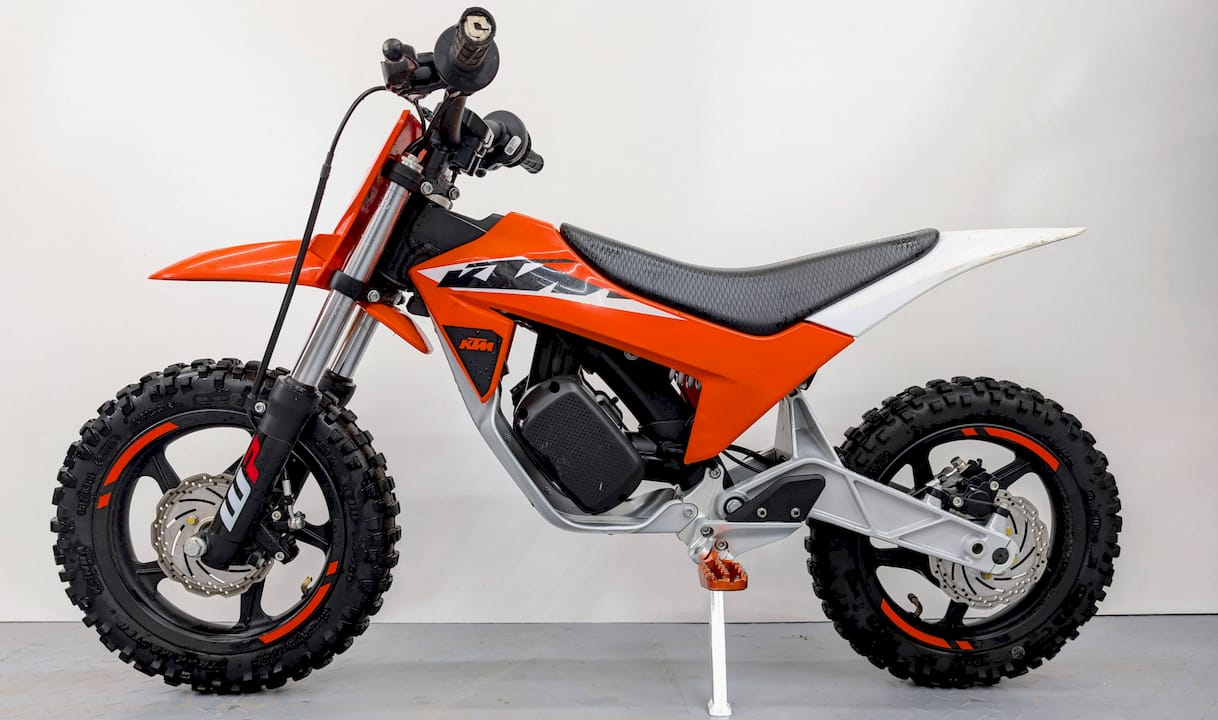
Flying Chip Factory's design work is grounded in bolt-on kickstand hardware for electric mini dirt bikes, developed by Drake through CNC prototyping and fit verification rather than theory alone. The shop's process runs prototypes through fixture design, hardcoat anodize finishing, and direct fit testing on the actual bike before a design ships. Detailed case studies and cycle-life test data on the E2 kickstand are available on request.
What Forces Act on Kickstand Components Under Load?
A kickstand pivot sees three distinct load types, and each stresses the part differently. The first is static vertical load: the weight transmitted straight down through the arm when the bike rests parked. This is the easiest case to design for, since the reaction force at the foot is simply a fraction of total bike weight determined by lean angle.
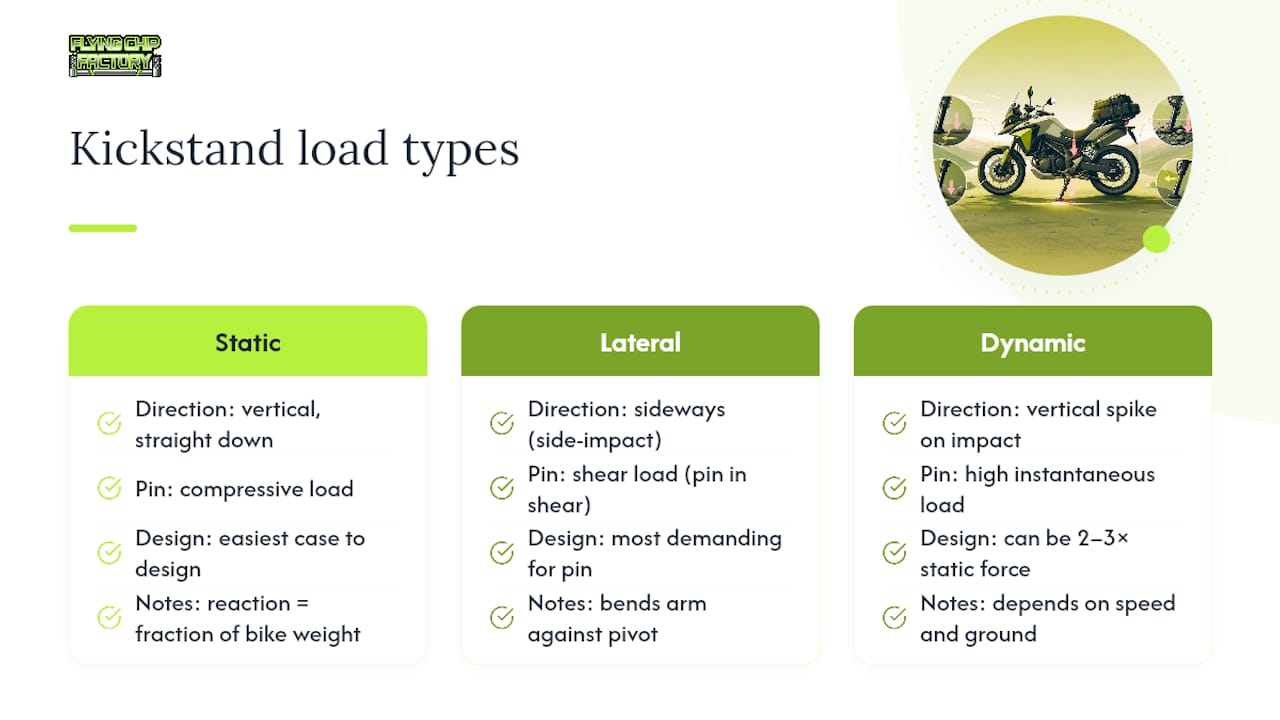
The second, more demanding case is lateral or side-impact load, which happens when a bike gets bumped while parked or when a rider leans hard into the stand while mounting up. This load bends the arm sideways against the pivot pin, putting the pin itself in shear rather than the compression it's designed for. Undersized pivot pins fail here first, not under normal parking loads.
The third case is dynamic shock load, which occurs when a bike is set down harder than intended, as when a rider kicks the stand out while still moving slowly. This spikes the instantaneous force well above static weight, sometimes by a factor of two or three depending on speed and ground compliance.
Stress concentrates at three predictable points: the pivot bore, the spring anchor tab, and the weld or fastener joint connecting the arm to its mount. Sharp internal corners at the pivot bore are the most common fatigue-crack origin in failed stands, which is why a generous fillet radius there matters more than most designers initially assume. A part engineered only for static load will look fine on a test bench and still crack within a season of real use if lateral and shock cases were never checked.
What Ergonomic Factors Shape Kickstand Usability?
Deployment force is the single biggest usability lever in kickstand design, and it's frequently underweighted relative to structural concerns. A stand that requires excessive force to flip down gets skipped by riders, which defeats its entire purpose regardless of how well-engineered the mechanism is underneath.
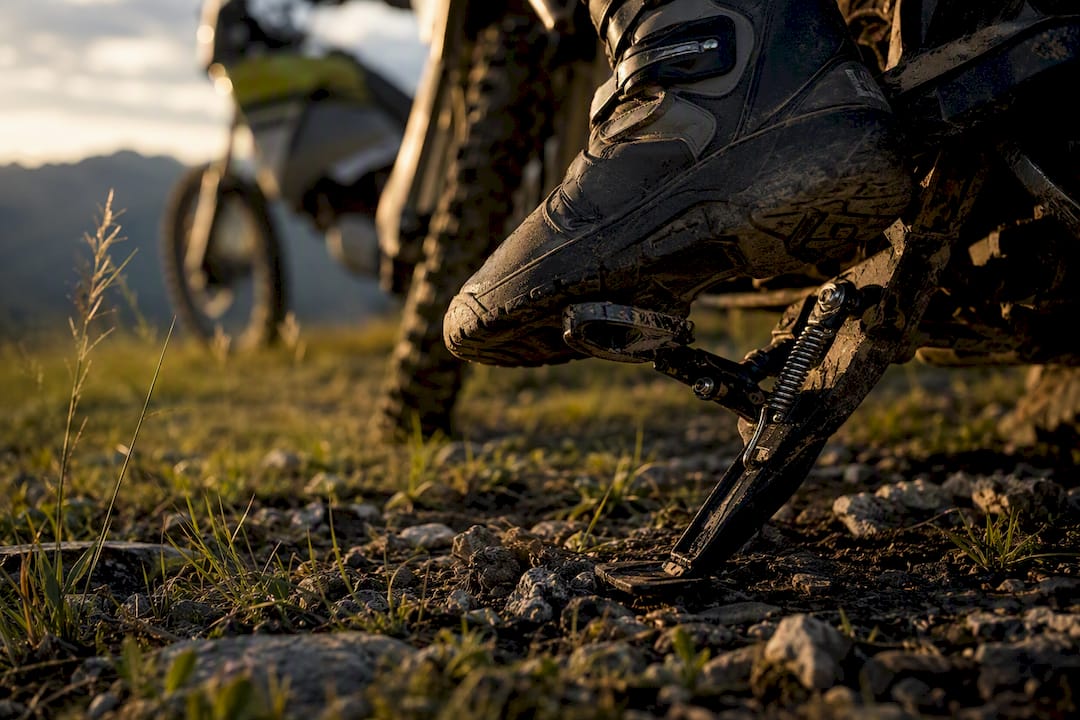
Foot placement geometry determines whether a rider can deploy the stand without dismounting awkwardly. The tab or pedal needs to sit within a natural range of motion for a foot resting on or near the peg, angled so a light downward push, not a stomp, does the work. Too far forward and it interferes with normal riding position; too far back and it's invisible to a rider's foot entirely.
Return-to-ride motion matters just as much as deployment. A stand that requires a deliberate upward kick to stow, rather than one that clears automatically as the bike leans upright, adds a step riders sometimes skip, leaving the stand half-engaged and dragging.
Feedback matters more than most engineers initially assume. A firm detent click at full deployment tells a rider the stand is actually locked, not just resting against a stop. Without that tactile confirmation, riders learn to distrust the mechanism and either over-check it or, worse, ride away with it not fully retracted. This is precisely why ball-plunger detents sized to create a distinct tactile click do double duty: they reduce housing stress and give the rider confidence in a single mechanical feature.
How Do Corrosion and Dirt Affect Kickstand Longevity?
Environmental exposure is where a kickstand design either proves itself or quietly fails within a season. Two mechanisms dominate: corrosion at exposed metal surfaces and dirt ingress at the pivot.
Corrosion attacks unprotected steel fastest, starting at the pivot pin and spring anchor where finish coverage tends to be thinnest after machining. Zinc plating offers a baseline defense but wears through at high-friction points like the pivot bore, exactly where protection matters most. Hardcoat anodize on aluminum parts holds up considerably better in that specific spot because the anodized layer is a hard oxide integral to the part's surface rather than a coating sitting on top of it.
Dirt and grit ingress cause a different failure mode entirely: abrasive wear inside the pivot. Every rotation of an unsealed pivot pulls in a small amount of grit, and that grit acts like sandpaper between the pin and its bore. Over enough cycles, clearance opens up, the stand develops play, and eventually it wobbles even when locked.
Sealed bearings or simple wiper seals at the pivot face solve most of this, at the cost of slightly higher part count and machining complexity. For a bike that spends its life on trails or gravel rather than pavement, that added complexity is worth it. A kickstand engineered for a paved commuter bike and one engineered for an off-road electric mini dirt bike shouldn't share the same pivot sealing strategy, because the dirt exposure profile is entirely different between the two use cases.
What Manufacturing Tolerances Affect Kickstand Reliability?
Tolerance stacking is where a kickstand design either comes together cleanly or fights the assembler at every step. The pivot bore is the tightest tolerance in the entire assembly, since even a few thousandths of clearance beyond spec translates directly into perceptible play at the foot of the stand, amplified by the length of the arm acting as a lever.
CNC machining holds tolerances that stamping and forging can't match economically at low volume, which is exactly why short-run kickstand production favors machined parts over stamped ones despite the higher per-unit cost. A stamped part might hold ±0.010 inch on a good day; a properly fixtured CNC-machined pivot bore holds far tighter, and that difference shows up directly in how solid the finished stand feels underneath a rider.
Fixture design during machining determines whether that tolerance is repeatable across a production run or just achievable on a single test piece. A fixture that locates the part off the same datum surface used in final assembly avoids the compounding error that shows up when a part is measured one way and mounted another.
Material temper choice interacts with tolerance in ways that are easy to overlook. Some aluminum tempers machine cleaner and hold dimension better than others across a production run, which matters directly for parts with tight pivot bore specs. Getting that choice wrong means fighting tool deflection and dimensional drift on every single part, not just an occasional outlier.
How Does Kickstand Placement Affect Bike Handling?
A kickstand's influence doesn't end once the bike is upright and rolling. Its mass, mounting point, and even its length affect how the bike behaves in motion, not just how it sits parked.
Mass placed low and near the bottom bracket adds to the bike's polar moment of inertia around the steering axis less than mass placed farther out, which is one reason side stands mounted close to the frame's centerline feel less intrusive to handling than bulkier center-mount designs. A heavier two-leg stand, useful for stability at rest, adds rotational mass exactly where a rider doesn't want it when leaning into a corner.
Ground clearance is the other half of the equation. A stand that hangs too low, or one whose pivot geometry doesn't fully retract flush against the frame, can strike the ground during aggressive cornering or on uneven trail sections, sometimes violently enough to unseat a rider. This matters far more on an off-road or motocross-style bike than on a paved commuter, which is exactly the case Flying Chip Factory designs around with its own bolt-on kickstand hardware for electric mini dirt bikes.
Frame interface geometry also shapes how a stand affects the bike's static lean angle at rest, which in turn interacts with suspension travel on bikes with active suspension. A stand mounted slightly off the intended pivot axis can leave a bike resting at an angle that puts uneven preload on one side of the fork or shock, a small but real design detail worth checking during fit verification rather than assuming from a CAD model alone. Component design context from adjacent fields, including directional design principles used in wheel engineering, offers a useful parallel for how geometry and mounting interact with overall ride dynamics.
When Should You Engineer Custom vs Buy a Kickstand?
Custom design earns its cost when geometry is unique, features need to integrate (locks, cargo mounts), or loads exceed off-the-shelf ratings. Buying wins for short runs, faster time to market, and lower engineering overhead. Quick checklist: unique fit needed? Integrated function required? High load? Tight timeline? Budget for tooling? Weigh those five honestly before committing.
— Drake
Get a Kickstand Built Right the First Time
Flying Chip Factory's bolt-on E2 kickstand is CNC-machined specifically for the KTM SX-E 2, GASGAS MC-E 2, and Husqvarna EE 2, so the fit and pivot tolerances discussed throughout this guide come standard, not as an afterthought. Skip the trial-and-error of adapting a generic stand to an electric mini dirt bike frame that was never designed for one.

Ordering is straightforward: specify your bike model, preferred finish, and any fit questions when you check out the E2 kickstand, and Flying Chip Factory's fit guides walk you through installation start to finish. Need something outside the catalog, a custom bracket, a short production run, or a replacement fixture? The same CNC shop takes on prototyping and short-run machining jobs directly with a machinist, so a quote is one message away.
Sources
- Design of a kickstand-integrated bicycle lock for a bike share program
- Motorcycle kickstand and detent mechanism (US Patent excerpt)
- Kickstand — Wikipedia
- Kickstands — Sheldon Brown