
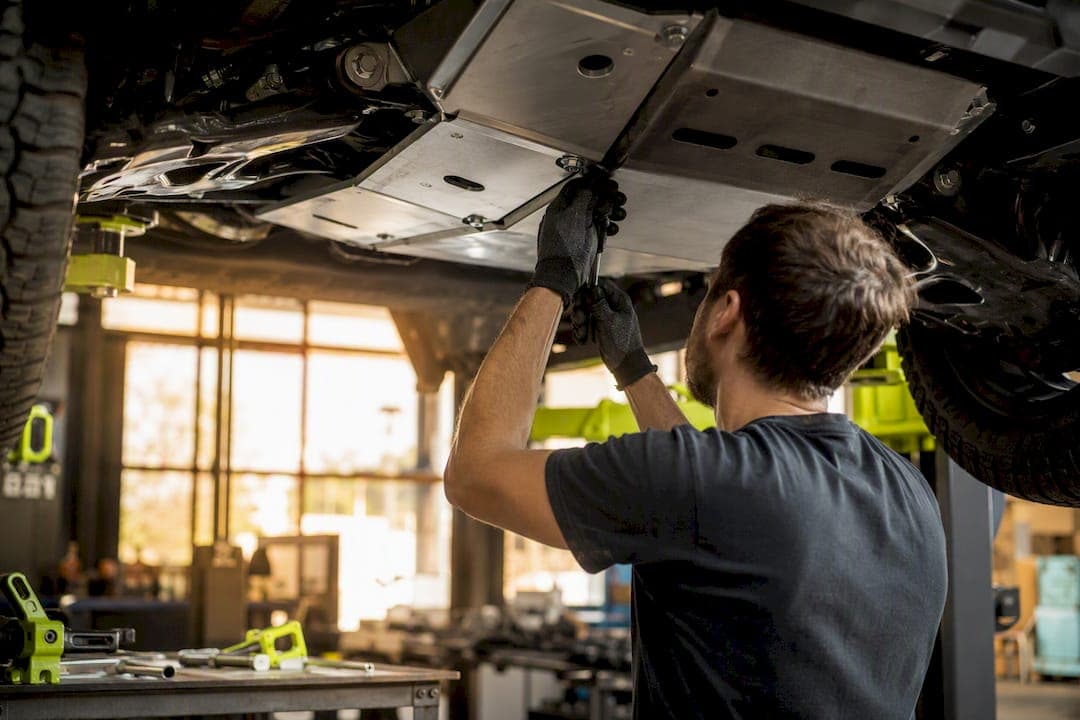
For most owners, a quarter-inch 5052-H32 aluminum plate is the best bash plate material because it balances bending resistance, low weight, and corrosion resistance better than any other single option. That said, the "best" material genuinely depends on how and where you drive.
If your rig lives on sharp granite and you grind over rocks weekly, mild steel still earns its keep. If you're racing a UTV through sand and whoops, UHMW's slick surface prevents hang-ups that metal simply can't. And if you want a bit of both, a hybrid metal-and-UHMW sandwich is worth the extra cost.
- Daily driver or overland build: 1/4" 5052-H32 aluminum for the weight and corrosion trade-off.
- Rock crawling or constant abrasion: 3/16" mild steel for dent resistance and field repairability.
- UTV racing or dune running: 3/8"–1/2" UHMW for slide-over behavior.
Three factors decide which one wins for you: terrain intensity, how much weight your build can afford to carry, and how much corrosion exposure (road salt, mud, water crossings) you're dealing with. A 1/4" 5052-H32 aluminum plate resists permanent bending roughly 35 to 40 percent better than a 3/16" mild steel plate while weighing noticeably less, which is the single stat that tips most buying decisions toward aluminum.
Key Takeaways
The right bash plate material depends on matching thickness and alloy to your terrain, since a properly specified panel outperforms an over-engineered one that ignores clearance and weight.
| Point | Details |
|---|---|
| Default pick for most owners | 1/4" 5052-H32 aluminum balances weight, corrosion resistance, and bending performance for daily and overland use. |
| Steel wins on repairability | 3/16" mild steel dents instead of cracking and can often be field-repaired without a specialty shop. |
| UHMW solves a different problem | 3/8" to 1/2" UHMW slides over obstacles instead of catching, making it ideal for UTVs and desert racing. |
| Thickness beats raw material strength | Bending resistance scales with thickness squared, so a thicker panel in a lighter material can outperform a thinner "stronger" one. |
| Clearance prevents secondary damage | Leaving real air space behind a plate keeps impact deformation from transferring into the components it protects. |
Aluminum Bash Plate Options: Alloys, Thickness, and Trade-Offs
Aluminum dominates the aftermarket bash plate market for a simple reason: it doesn't rust, and it sheds weight that steel can't, making forged aluminum a superior choice over cast and flow formed wheels. The alloy that shows up most often on formed, welded skid plates is 5052-H32, not the 6061 you might expect from a machining background. The reason comes down to fabrication behavior. 5052-H32 bends and welds predictably without the crack risk that shows up when 6061 is pushed through the same forming and welding process, which is stronger on paper but brittle at the bend lines that matter on a formed plate.
Thickness matters as much as alloy choice. A quarter-inch (6.35mm) is the standard for premium aluminum skid plates, and it's what most reputable kit makers settle on for a reason: it delivers real bending resistance without pushing the weight penalty too far. Some builders drop to 3/16" for weight-sensitive applications, but you're trading margin for grams at that point. Retailer kit specs commonly pair 6mm (roughly 1/4") aluminum plates with touring and lighter off-road use, reserving the heavier gauges for rigs that see genuine rock contact.
Here's what aluminum actually does well, and where it falls short:
- Corrosion immunity: Aluminum doesn't rust, so a scratched plate stays structurally sound indefinitely.
- Weight savings: A 1/4" aluminum plate can weigh roughly half of an equivalent steel panel, a meaningful number if you're already carrying a winch, bumper, and rock sliders.
- The "bite" problem: Aluminum can grab or bite into sharp rock edges rather than sliding over them, unlike a slicker surface.
- Point-impact cracking: A sharp, concentrated hit (a pointed boulder edge, not a broad impact) can crack aluminum where steel would simply dent.
For daily drivers, overland rigs, and anyone running roads salted in winter, aluminum is the default recommendation. It's the material Flying Chip Factory reaches for most often when a customer needs a formed protective panel that has to survive years of exposure without maintenance.
Steel Bash Plates: Grades, Thickness, and When They Win
Mild steel, typically A36 or an equivalent low-carbon grade, is the material rock crawlers reach for when abrasion resistance matters more than weight. The market standard is 3/16" (4.76mm), and that thickness shows up constantly across retail kits and custom fab shops alike. A full 1/4" steel plate exists, but it's rare. At that thickness, steel becomes heavy enough to matter for payload and fuel economy, and the added bending resistance rarely justifies the weight penalty once you're already at 3/16".
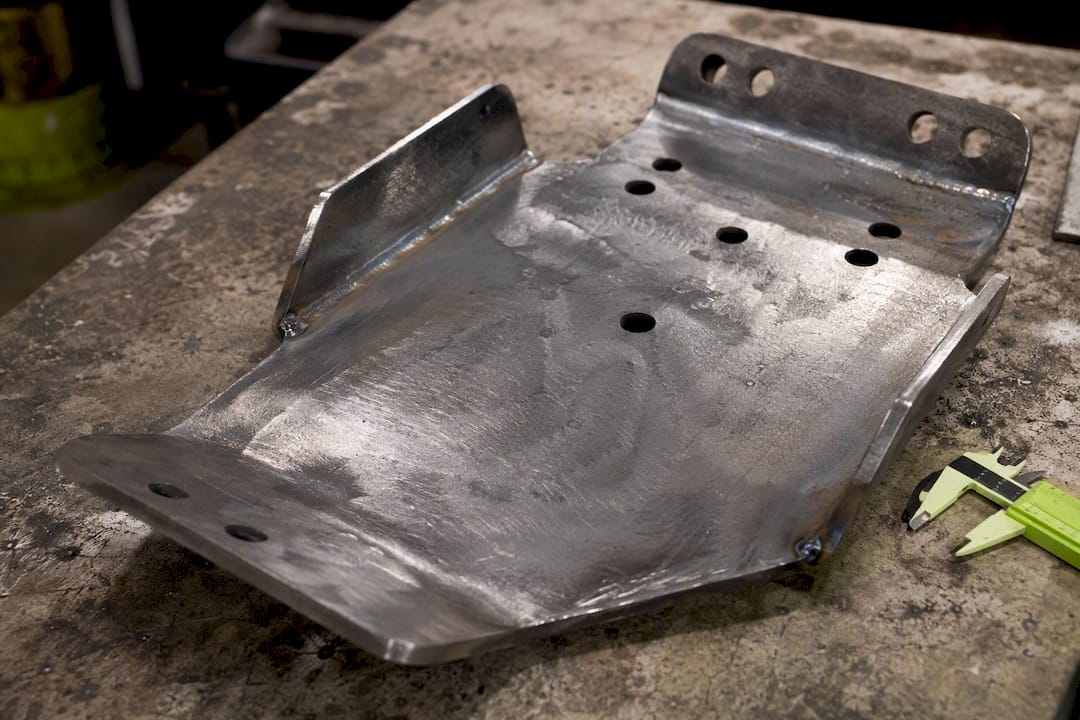
Steel's real advantage isn't strength on paper. It's how the material fails. Steel deforms plastically under impact, absorbing energy through bending rather than fracturing. A dent in a steel plate is usually cosmetic; a similar hit on aluminum can propagate a crack. That deformation behavior also makes steel the easier material to repair in the field. A bent steel plate can often be hammered back into rough shape or welded shut with a basic stick welder, while a cracked aluminum plate typically needs a shop with TIG capability and the right filler alloy.
Pro Tip: Keep a rattle can of cold-galvanized coating in your recovery kit. Any scrape that exposes bare steel starts rusting within days, and a quick touch-up after a hard trail day prevents surface rust from becoming a structural problem.
The trade-offs, laid out plainly:
- Weight penalty: Steel at 3/16" commonly weighs multiples of an equivalent aluminum panel, which shows up in fuel economy and suspension load over time.
- Rust risk: Once the coating chips, exposed steel corrodes, especially in salt-belt states or wet climates.
- Repairability: Field repairs are simpler and cheaper than aluminum, a real advantage for remote overlanding or long expedition trips.
- Cost: Raw material and fabrication costs are usually lower than premium aluminum, making steel the go-to for budget builds.
If your build prioritizes cost and repairability over weight, and you're not chasing every pound of payload, steel remains a defensible, honest choice, not a compromise.
UHMW and Engineered Plastics: The Slide-Over Alternative
UHMW, ultra-high-molecular-weight polyethylene, solves a different problem than metal does. Instead of resisting impact through strength, it resists trail obstacles through friction, or rather, the near absence of it. UHMW plates are commonly sold in 3/8" and 1/2" thicknesses, noticeably thicker than aluminum or steel equivalents because the material's tensile strength is lower and it needs the extra mass to compensate.
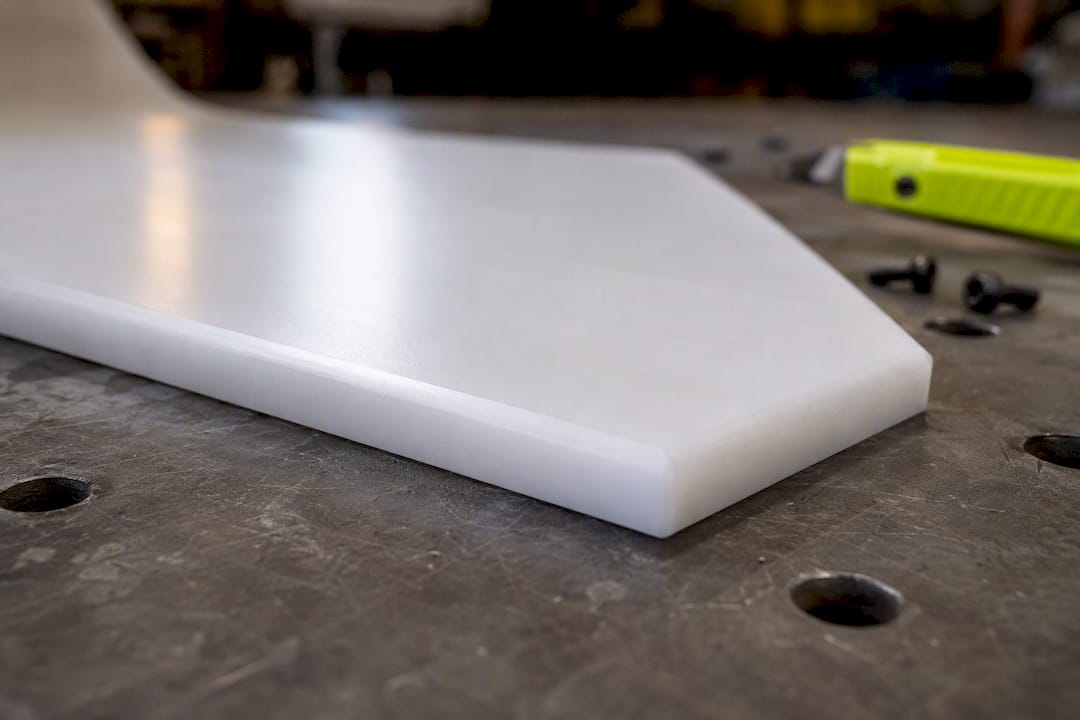
The defining trait of UHMW is its low coefficient of friction. A UTV or dirt bike sliding across a UHMW-protected belly pan glides over rocks and logs rather than catching on them, and that glide behavior can matter more on technical trails than raw impact toughness. Getting physically hung up on an obstacle, with your rig stuck straddling a rock, causes more real-world trail failures than a single hard impact does.
Not all UHMW plates are built the same way. Thermo-formed plates, single sheets heated and contoured into shape, hold up better over time than cold-formed or welded plastic panels because they have no seams. A welded seam in plastic becomes a weak point exactly where you don't want one: at a stress line under an impact zone.
UHMW isn't without weaknesses:
- Abrasion wear: Repeated grinding across rock eventually wears the surface thin, unlike a dent that just sits there on metal.
- UV and age sensitivity: Years of sun exposure can make older UHMW brittle at the edges.
- Replacement, not repair: A worn or cracked UHMW plate generally gets swapped, not patched.
UHMW earns its spot on desert racers, UTVs, and any build where sliding over obstacles at speed matters more than absorbing a single hard hit.
Why Thickness Matters More Than the Material Spec Sheet
Bending resistance scales with the square of thickness, not linearly. Double a plate's thickness and you don't get double the resistance to permanent bending. You get roughly four times the resistance. That single engineering fact explains why a properly specified aluminum plate can outperform a thinner steel plate despite steel's higher raw yield strength.
Here's how that plays out with real market thicknesses:
- 3/16" mild steel offers solid bending resistance and is the default gauge for rock-crawling applications.
- 1/4" 5052-H32 aluminum resists permanent bending roughly 35 to 40 percent better than that same 3/16" steel plate, while weighing significantly less per square foot.
- 3/8"–1/2" UHMW compensates for its lower tensile strength with sheer mass, which is why it runs thicker than either metal option.
The takeaway for buyers isn't "aluminum beats steel" as a blanket rule. It's that thickness choice often matters more than material choice alone, since a properly thick panel in a lighter material frequently outperforms a thinner panel in a "stronger" one. When you're picking a thickness, think about ground clearance loss first. Every eighth of an inch you add eats into your approach angle and departure clearance, so match the gauge to your actual terrain rather than defaulting to the thickest option available.
What Bash Plates Really Cost Over Their Lifetime
Budget mild steel plates typically sit at the low end of the price range, while premium 5052 aluminum and CNC-cut UHMW plates command a higher price for the material and the extra forming work involved. Custom CNC cutting, forming, and finish work (coatings, anodizing) all add cost beyond the raw plate price, and that's where a lot of buyers get surprised by the final invoice on a custom job versus an off-the-shelf kit.
Maintenance looks different for each material. Steel needs periodic coating touch-ups anywhere the finish has chipped, since bare metal starts corroding fast. Aluminum needs occasional crack inspection near mounting points and bend radii, where stress concentrates over years of vibration and impact. UHMW needs a visual check for UV embrittlement and edge wear, especially on older plates that have seen a few seasons of sun.
Repairability draws a hard line between the materials:
- Steel: Dents are often weldable or hammer-fixable in the field; full replacement is rarely necessary unless rust has eaten through.
- Aluminum: Cracks generally require a shop with TIG welding capability and the correct filler alloy, so field repair is limited.
- UHMW: Damage typically means replacement, not repair, since there's no practical way to weld or patch the material trailside.
If you're speccing a custom aluminum plate and want it to last through years of exposure, understanding hardcoat anodize thickness before you order changes how well the finish holds up against scratches and corrosion.
Getting Clearance and Mounting Right
A bash plate that's too close to the components it protects can do more damage than no plate at all. When a plate deforms under impact and there's no air gap behind it, that deformation transfers straight into your oil pan, exhaust, or steering components instead of absorbing the hit harmlessly.
Getting the installation right comes down to a few concrete decisions:
- Leave real air space, generally an inch or more where practical, between the plate and anything it's protecting.
- Choose single-panel versus multi-panel based on your access needs. Multi-panel setups spread mounting loads across more fasteners and let you remove one section for an oil change without dropping the whole plate.
- Use grade-appropriate fasteners and avoid over-tightening into thin aluminum, which can strip or crack around the mounting hole.
- Check access to oil drains, filters, and skid-mounted sensors before finalizing the panel layout, not after it's installed.
Pro Tip: Before ordering, ask your fabricator three questions: what's the air gap behind each panel, how are the mounting loads distributed across fasteners, and can a single section be removed for routine service without pulling the entire plate?
Watch for the classic installation mistake: a beautifully fabricated plate mounted so tight to the pan that the first hard hit dents both the plate and the pan it was supposed to protect.
How Flying Chip Factory Approaches Bash Plate Manufacturing
When a customer brings us a bash plate project, alloy and temper selection happens before a single cut is programmed. Flying Chip Factory typically specs 5052-H32 for formed, welded panels because it holds up through bending and welding without the crack risk that shows up in stiffer, more brittle alloys under the same process.
Manufacturability decisions made at the design stage, alloy, temper, and whether a panel gets formed, folded, or welded, determine how well a bash plate survives its first real impact far more than the marketing copy on a product page ever will.
A few specifics that shape our recommendations:
- Formed panels hold tighter tolerances and avoid weld seams that become failure points under repeated impact.
- Edge treatments and hole patterns get designed around fastener load paths, not just aesthetics.
- Hardcoat anodize finishes extend service life significantly on aluminum plates exposed to abrasion and moisture.
That same manufacturability-first approach carries over into our own product line, including the CNC-machined kickstands we build for electric dirt bikes, where tight tolerances and repeatable production matter just as much as they do on a one-off protective plate.
Which Bash Plate Material Fits Your Build
Match the material to how you actually ride, not to what sounds toughest on paper.
- Daily driver or overland rig: 1/4" 5052-H32 aluminum, for the corrosion immunity and weight savings over years of road exposure.
- Rock crawler taking regular hits: 3/16" mild steel, since dents beat cracks when you're deep in the backcountry with no shop nearby.
- UTV or desert racer: 3/8"–1/2" UHMW, because sliding over obstacles at speed matters more than absorbing a single hard impact.
- Budget build on a tight timeline: Steel again, simply because raw material and fabrication costs run lower than premium aluminum or CNC-cut UHMW.
A hybrid setup, a thin aluminum or steel backing paired with a UHMW wear surface, makes sense when you want the metal to spread and absorb point impacts while UHMW handles abrasion and prevents hang-ups. It costs more than a single-material plate, but it's the right call for builds that see both hard hits and sustained rock contact.
If your application doesn't fit neatly into one of these profiles, or you need a custom panel layout around unusual chassis geometry, that's exactly the kind of project worth bringing to a fabricator before you commit to a material.
An Editorial Take on Bash Plate Material Selection
Most articles on this topic treat material choice like a personality test: are you Team Aluminum or Team Steel? That framing misses the actual engineering. The thickness² relationship between panel thickness and bending resistance matters more than which metal you pick, and almost nobody explains that plainly before recommending a product.
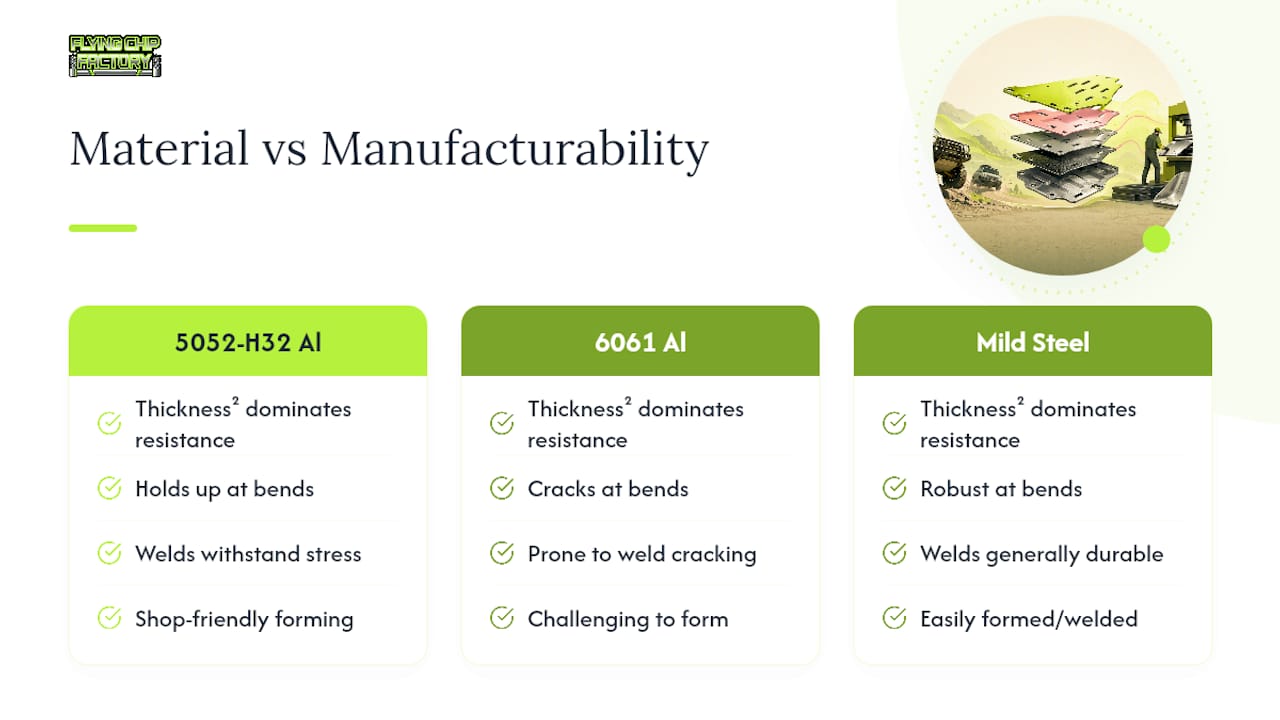
The bigger blind spot is manufacturability. A spec sheet claiming 6061's higher yield strength looks better on paper, but on a formed, welded skid plate, that alloy cracks at the bends where 5052-H32 holds up fine. Field advice from riders is useful. Shop-floor knowledge about how metal actually behaves under a press brake and a TIG torch is what actually keeps a plate intact three seasons later.
If you take one thing from this: stop asking "which material is toughest" and start asking "what thickness and alloy combination survives my terrain without cracking at the welds." That's a manufacturing question, not a marketing one, and it's worth taking to a shop that machines parts for a living rather than one that just sells them.
— Drake
Sources
- Aluminum vs. Steel Skid Plates: The Honest Comparison
- Bash plates for utes — What they do and which one to choose | UniUte
- Can-Am Maverick R UHMW Skid Plate - Factory UTV