
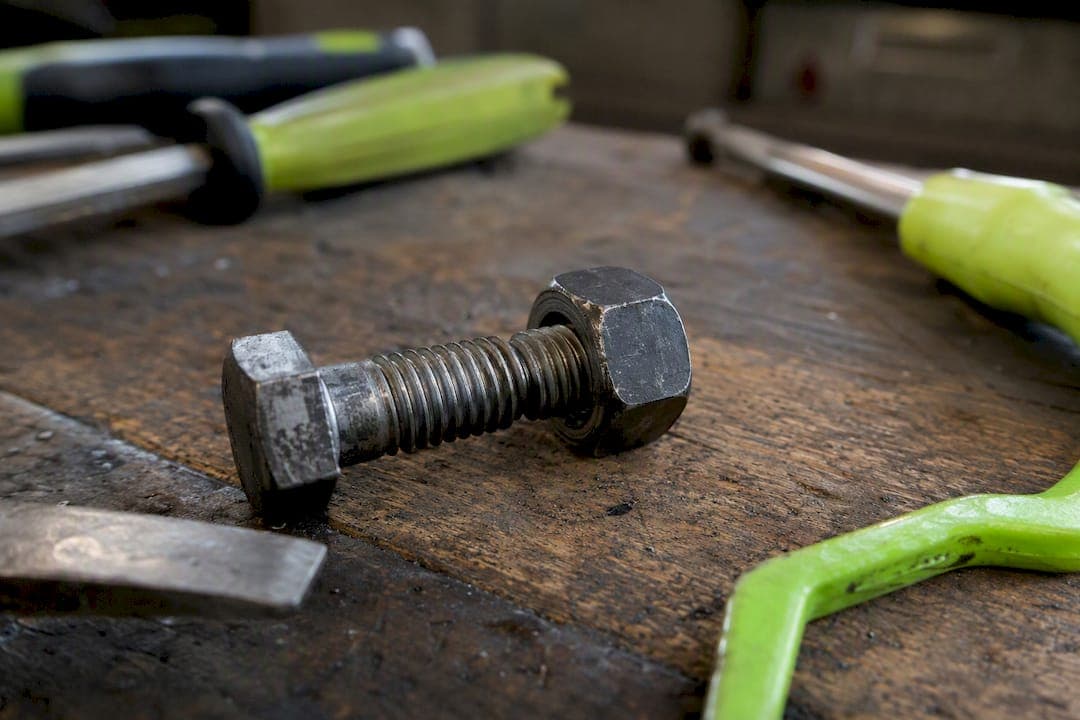
No, metric and imperial threads are not interchangeable. Their diameters occasionally land close to each other, but pitch and thread form almost never do, and that mismatch is what strips bolts and cracks fixtures under load.
You'll see nearest-equivalent pairings thrown around constantly, referring to metric diameters approximately matching imperial diameters like M6 and 1/4 inch, M8 and 5/16 inch, M12 and 1/2 inch. These are diameter-only approximations and not substitutes you can grab off the shelf and thread in with confidence.
- M6 sits close in diameter to 1/4" but pitch differences mean partial thread engagement if you force one into the other's mating part.
- M8 is close in diameter to 5/16", but the threads per inch don't align.
- M12 is similar in diameter to 1/2", yet the threads differ, preventing proper engagement.
A quick statistic to anchor this: TPI = 25.4 ÷ pitch in millimeters. Run that formula on M6's 1.0mm pitch, and you get 25.4 TPI, nowhere near the 28 TPI on a real 1/4" fastener. That gap is exactly why forcing a metric bolt into an imperial nut, or vice versa, cross-threads the part before it's even halfway seated.
Key Takeaways
Metric and imperial threads share occasional diameter approximations but never truly match on pitch, TPI, or thread form, and treating them as interchangeable causes partial engagement and premature failure.
| Point | Details |
|---|---|
| No true interchangeability | Diameter matches like M6 ≈ 1/4" ignore pitch and TPI differences that cause partial engagement. |
| Verify pitch, not just diameter | Use TPI = 25.4 ÷ pitch(mm) and a physical gauge before assuming any fastener fits. |
| Conversion tables are for BOMs only | Use nearest-equivalent charts for procurement cross-referencing, never as an assembly substitution guide. |
| Tooling costs multiply with mixed standards | Running both metric and imperial taps, drills, and gauges raises setup time and short-run costs. |
| Get a shop review before finalizing threads | Flying Chip Factory offers prototype machining, short-run production, and thread rework with direct machinist access for spec reviews. |
Metric vs Imperial Threads: The Fundamentals Engineers Actually Need
Metric threads are called out by nominal diameter in millimeters and pitch in millimeters, so M8×1.25 tells you the shank is 8mm across and the threads repeat every 1.25mm. Imperial threads under the Unified/SAE/ANSI system use diameter in inches paired with threads per inch, so 1/4-20 means a quarter-inch shank with 20 threads crossing every inch of length, as laid out in this definitive guide to metric and imperial fastener nomenclature.
Converting between the two isn't guesswork. The formula is straightforward:
- TPI = 25.4 ÷ pitch (mm) converts a metric pitch into its imperial threads-per-inch equivalent.
- Inches = mm ÷ 25.4 converts a metric diameter into inches, per the conversion math published by CADMIL.
- Round conservatively. A 0.05mm rounding error in pitch can shift TPI by a full unit on fine threads, and that's enough to cause interference.
Thread form matters just as much as the numbers. Metric threads (ISO) cut a 60 degree flank angle. Unified imperial threads also use 60 degrees, so the profiles look similar on paper, but the root and crest geometry, plus how pitch diameter tolerances stack up, still differ enough that mixed pairs bind unevenly under torque. And don't confuse any of this with pipe threads: NPT and BSP use their own angles and rely on flank interference or sealant for a leak-tight joint rather than a straight mechanical fit, a distinction covered in more detail in this breakdown of NPT vs BSP threading.
Metric Thread Equivalents: A Cross-Reference Table
Here's a working cross-reference for the sizes that come up most often on a shop floor, pairing metric pitch against the imperial diameter and TPI values engineers usually compare them to.
Nearest-equivalent tables like this one, and the broader thread conversion tables TR Fastenings maintains, are explicit that these are diameter approximations. None of the pairs above line up in both diameter and pitch simultaneously; even M10 to 3/8", the closest of the bunch, still needs its TPI checked before anyone treats it as a swap.
A few notes on how to actually use this chart:
- Use it for bill-of-materials cross-referencing and procurement planning when you're sourcing parts globally, not as a green light to substitute one bolt for another mid-assembly.
- Always verify pitch or TPI directly on the physical part with a gauge. A diameter match tells you almost nothing about whether the threads will actually seat.
- When exact tolerances matter, cross-check against full ASME/ISO metric limiting-dimension tables, which list major, pitch, and minor diameters plus tolerance classes for both external and internal threads.
Why Metric and Imperial Bolts Fail When Swapped
Force a metric bolt into an imperial nut, or the reverse, and you get partial thread engagement. Only a fraction of the thread flanks actually make contact, which cuts shear strength well below what the fastener is rated for. Add vibration or a cyclic load and that partial engagement backs out or strips outright, often without warning until the joint has already failed.
Flank-angle and pitch-diameter mismatches concentrate stress on whatever thread crests do manage to touch, instead of spreading load evenly across the engagement length. That's the mechanical reason a bolt that "threads in fine by hand" can still fail catastrophically once torque is applied.
Common failure modes worth knowing:
- Cross-threading on assembly — the fastener starts crooked and cuts new, damaged threads into the mating part.
- Stripped threads under load — partial engagement gives way once the joint sees real force or vibration.
- False sense of fit — the bolt turns freely for a few threads, which masks the mismatch until it seizes or fails later.
- Galling in soft materials — aluminum and other soft alloys deform around a mismatched thread instead of cutting cleanly, ruining the bore for future use.
Pro Tip: If you're tempted to hand-fit a "close enough" bolt for a low-risk, truly temporary fix, verify pitch or TPI with a gauge first, limit the load to hand-tight torque only, and replace it with the correct fastener before the part sees any real service life. Treat it as a stopgap, never a fix.
Manufacturing Realities: Taps, Drills, and Short-Run Costs
Pitch dictates tap drill size directly. Shops commonly size the tap drill by subtracting pitch from major diameter to land near a standard thread engagement, and the tap drill guidance in standard thread charts exists precisely because getting that wrong produces threads that either strip immediately or won't accept the mating fastener at all.
Switching between metric and imperial standards on a job isn't just a spec change. It changes what's sitting in the tool crib.
- Metric and imperial taps, drill bits, and sockets are separate inventory items. A shop running both standards needs double the tooling on hand.
- Setup time climbs when a job requires a tap or drill the shop doesn't already have staged, which shows up directly in quoted lead time.
- Go/no-go gauges confirm a tapped hole falls within tolerance fast; a go/no-go gauge reference is usually enough for routine production work. CMM inspection gets reserved for tight-tolerance mating parts or when a customer requires documented dimensional proof.
Pro Tip: Before quoting rework on a mismatched or damaged thread, weigh the tooling changeover cost against simply machining a new part. On a short run, the time spent staging an unfamiliar tap and verifying the result often costs more than starting fresh.
How to Measure a Thread and Verify Compatibility
Run this sequence before you assume a fastener or tapped hole is usable.
- Measure major diameter with calipers across the outside of the threads.
- Measure pitch or TPI using a pitch gauge for metric or a TPI gauge/thread pitch card for imperial.
- Check thread form and engagement length, then confirm fit with go/no-go gauges rather than a visual check alone.
From there, you land on one of four outcomes:
- Accept the part as-is.
- Re-tap to correct a shallow or damaged thread.
- Re-machine the feature entirely if tolerances are out of range.
- Quote a replacement fastener or part rather than attempt rework.
Choosing Metric or Imperial for a New Design
Pick your threading standard based on where the part gets serviced, not what's convenient on the design bench today. A product supported globally almost always favors metric, since the broader industry trend already leans metric for new product lines and sourcing replacement fasteners is easier worldwide.
- Follow whatever standard your customer or OEM specifies. Retrofitting a design to match an existing fleet or platform saves far more than it costs.
- Standardizing on one thread system across a BOM cuts the tooling and inventory burden covered above. Mixed standards on one assembly multiply tap, drill, and gauge counts fast.
- Material choice interacts with thread performance too. Soft alloys tap differently than hardened steel, which is worth factoring in alongside standard selection, as covered in this comparison of T6 vs T6511 aluminum tempers.
- Legacy equipment sometimes forces your hand regardless of what's ideal long-term; document that constraint on the drawing so future engineers understand why the standard doesn't match the rest of the platform.
Shop Notes From Flying Chip Factory on Verification and Quoting
Incoming threaded parts get triaged fast: gauge the pitch, check engagement length, and confirm thread form before anything moves to assembly. If a hole is undersized or damaged, Flying Chip Factory generally re-taps when the material allows it and quotes a replacement fastener when it doesn't.
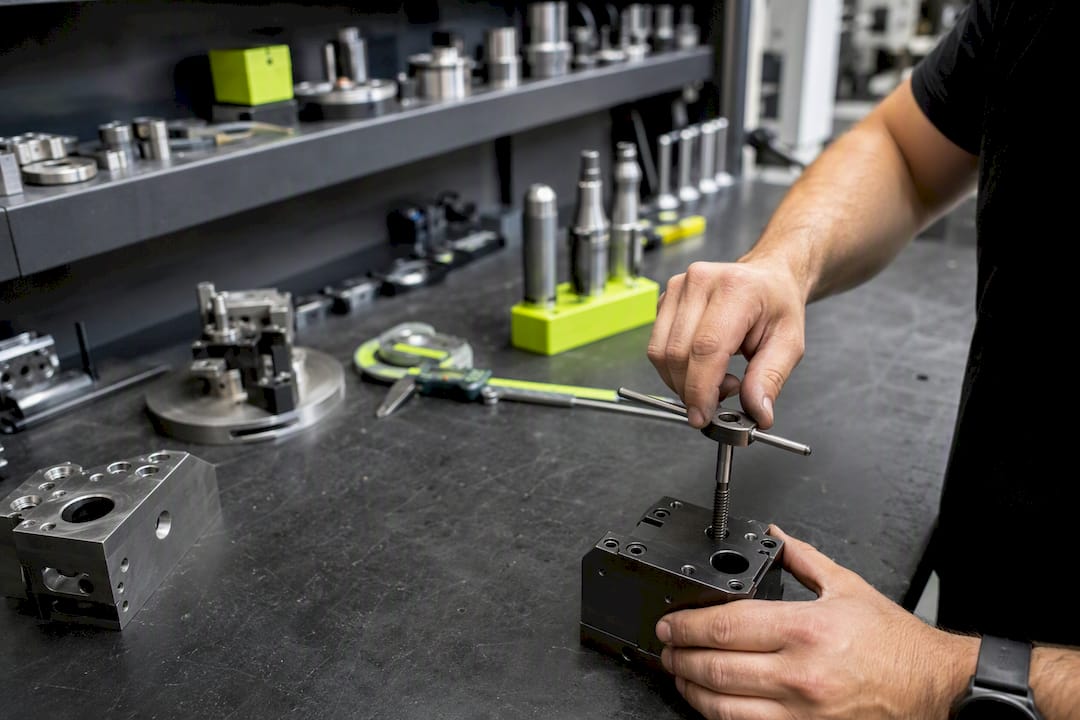
Pro Tip: On prototype fixtures, chamfer the lead-in thread and start every fastener by hand before powering a driver. That single habit catches cross-threading before it ruins a bore.
What Early Communication Actually Saves You
Most thread mismatches trace back to a spec that changed standards partway through a design cycle without anyone flagging it. Flying Chip Factory's triage on incoming parts almost always comes down to two calls: re-tap if the material and hole depth allow it, or quote a fresh part when the damage runs too deep for a clean fix. Loop the shop in before you finalize a thread callout, not after the first prototype comes back stripped.
— Drake
Getting Threaded Parts Right the First Time
If a design changed standards midstream, or a prototype came back with a stripped or mismatched thread, that's a spec review, not a redesign. Flying Chip Factory handles prototype machining, short-run production, and thread rework, including custom fasteners, with direct access to the machinist actually cutting your part.

That direct line matters more than it sounds. You're not routing a question through a sales rep and waiting three days for an answer, you're talking to the person holding the part. For engineers weighing whether a mismatched thread needs re-tapping or a whole new component, that fast back-and-forth often decides the schedule. Send over your drawing or the suspect part and get a spec review and quote before you commit to a fix that might not hold.
Sources
- Metric vs. Imperial Fasteners: The Definitive Guide for OEMs
- TR knowledge base | Thread conversion table
- Standard Thread Size Charts Explained : Metric & Imperial - Piping Technology System
- Metric Thread Size Chart & Calculator - CADMIL