
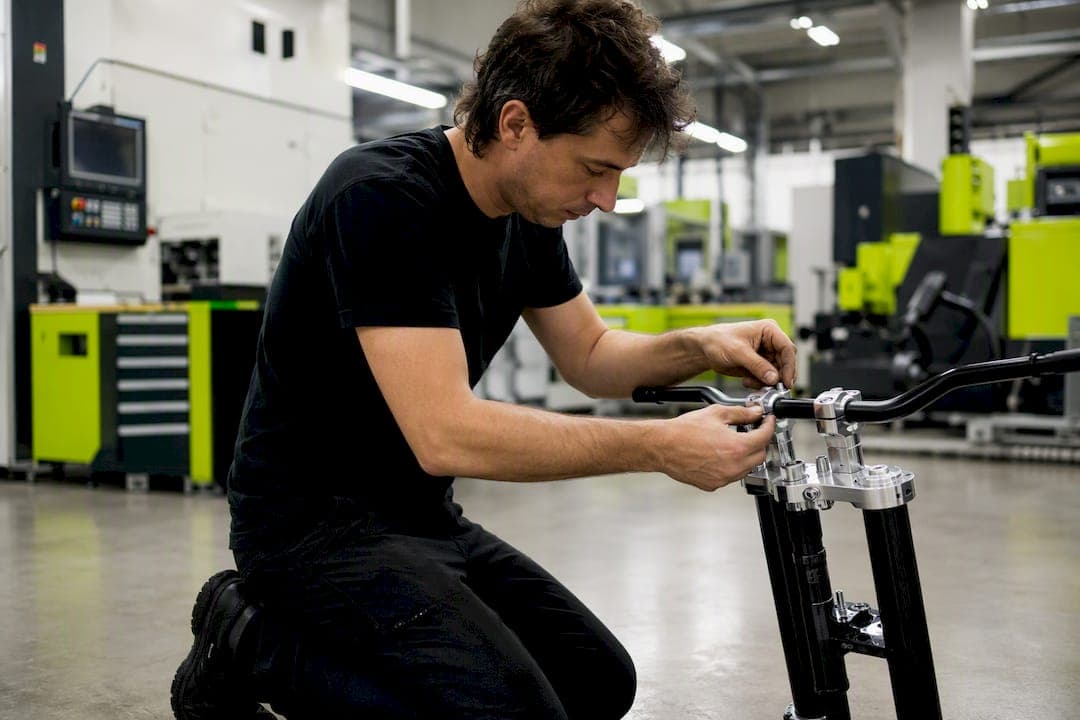
The best Mako 360 handlebar mount alternatives fall into four categories: Xtrig PHDS for budget-minded riders who accept less shock absorption, Flexx Bars for pronounced up and down flex with tunable elastomers, Twisted Engineering Bars for similar flex dynamics with different hardware, and the Scotts Rubber Mount for simpler damping that plays nice with steering stabilizers. Read the comparison below, then run the fit checklist before you buy. Flying Chip Factory's engineering team weighs in later with a manufacturing perspective on why some of these hold up better than others.
TL;DR:
- Rubber-insert mounts like PHDS are the most affordable option but provide the least impact absorption, especially against hard impacts on rocky terrain.
- Flexx Bars and Twisted Engineering Bars offer structural flex to absorb impacts, with Flexx being taller and more tunable, but adding cockpit bulk and changing steering feel.
- 360-degree elastomer mounts deliver omnidirectional vibration isolation, better suited for long, impact-heavy rides, but require more complex installation and regular elastomer maintenance.
- All systems' durability depends on material quality and maintenance; elastomer wear is inevitable, but replacement parts are usually accessible and straightforward to swap.
- Compatibility hinges on bar diameter, clamp style, and stabilizer fit, with the Scotts Rubber Mount optimized for stabilizer users and Flexx/Twisted systems requiring specific bending and mounting considerations.
Which Mako 360 Handlebar Mount Alternative Fits Your Riding?
Riders shopping for a mako 360 handlebar mount alternative usually land on one of four options, and each one solves a slightly different problem. Forum threads comparing these systems side by side consistently name the same four contenders, and the tradeoffs are pretty consistent across reports too.
Xtrig PHDS (Progressive Handlebar Damping System) uses a rubber-insert mounting design that lets you keep your standard handlebars while adding a layer of isolation between the bar and the triple clamp. It is the cheapest way into vibration damping, and it is also, by most rider accounts, the least effective at soaking up hard impacts. Rider comparisons on Adventure Rider describe PHDS as the go-to for someone who wants a noticeable improvement over stock without spending real money, but the same threads note it won't match a full elastomer 360-degree mount when your hands are numb three hours into a desert loop.
Flexx Bars take a completely different approach. Instead of isolating the bar from the clamp, the bar itself flexes, giving you directional up and down travel that absorbs impacts as they happen rather than damping them after the fact. The elastomers inside are replaceable and tunable, so you can stiffen or soften the ride depending on terrain. The tradeoff is bulk. These bars sit taller and look different in the cockpit, and some riders find the flex point changes their sense of where the front end is pointed.
Twisted Engineering Bars follow the same flex-bar philosophy as Flexx but use their own hardware and elastomer system. Fit and feel vary a bit depending on which bend and elastomer durometer you choose, and the mounting hardware isn't interchangeable with Flexx parts. Riders who've run both report similar vibration reduction, but the maintenance routine and available accessories differ enough that it's worth checking parts availability for your specific bike before committing.
Scotts Rubber Mount takes the simplest route: a rubber-damped mount built primarily to work alongside a steering stabilizer. It doesn't offer the same shock absorption as a flex bar or an elastomer 360 mount, but it's lighter, less complex, and it won't interfere with stabilizer hardware the way some other mounts can.
- PHDS: cheapest, easiest install, least shock absorption
- Flexx Bars: strongest up/down compliance, tunable, adds cockpit bulk
- Twisted Engineering Bars: comparable flex performance, different hardware ecosystem
- Scotts Rubber Mount: simplest damping, best stabilizer compatibility
Pro Tip: Before you buy any mount, check whether your steering stabilizer's clamp interferes with the mount's bulk. Flex bars and 360-degree mounts sometimes need spacer kits to clear stabilizer hardware, and that's an extra cost most riders don't budget for.
How Do These Mounting Systems Actually Reduce Vibration?
The mechanical differences between these systems explain why two mounts that both claim to "reduce vibration" can feel completely different on the trail.
PHDS relies on a rubber insert between two rigid surfaces. It compresses under load and returns to shape, which dampens high-frequency buzz reasonably well but does little for sharp, high-magnitude impacts like square-edge hits. Flex bars, by contrast, are a structural solution. The bar itself bends at a designed pivot point, and elastomers control how much and how fast it returns. That's a fundamentally different kind of damping. It's not absorbing vibration through material compression alone. It's converting impact energy into controlled bar movement.
Product listings for the Mako 360 advertise 360-degree damping that eliminates metal-to-metal contact entirely, which is a meaningfully different design goal than a mount that only flexes vertically. Directionality matters here. A 360-degree mount isolates motion in every plane, while flex bars are largely built for vertical compliance. That's why riders report flex bars feeling more direct in steering input but less forgiving on side-loaded hits, like rocks caught at an angle.
- 360-degree elastomer systems: omnidirectional isolation, more setup complexity
- Structural flex bars: strong vertical compliance, steering feel changes at the flex point
- PHDS rubber inserts: simplest, weakest against hard impacts
- Installation on elastomer systems usually means periodic torque checks and elastomer swaps as they compress over time
How to Pick the Right Mount for Your Bike
Work through this checklist in order. Skipping steps is how riders end up with a mount that doesn't fit or doesn't solve the problem they actually have.
- Identify your vibration problem first. Constant engine buzz on long rides calls for a different fix than occasional hard impacts on rocky trails. PHDS handles the former better than the latter.
- Match the mount to your riding discipline. Enduro and desert riders taking repeated hard hits benefit more from flex bars or a full 360-degree mount. Trail riders dealing with steady vibration over shorter rides often find PHDS sufficient.
- Decide how much cockpit bulk you'll tolerate. Flex bars add height and visual mass. If a clean cockpit matters to you, factor that in before you fall in love with the damping numbers.
- Check stabilizer compatibility. If you run a steering stabilizer, confirm the mount's clamp geometry doesn't conflict with it. Scotts Rubber Mount is built with this in mind; others may need adapters.
- Verify bar diameter and clamp type. Most of these systems are built around standard 7/8 inch or 1 1/8 inch bars, but confirm before ordering, especially if you're switching bar diameters at the same time.
- Ask about replacement parts. If a seller can't tell you how to source replacement elastomers, that's a red flag. You will need them eventually.
Pro Tip: A shop that can't explain their disassembly process for a simple bar angle adjustment probably designed the mount for looks, not maintenance. Ask before you buy, not after.
What Flying Chip Factory's Engineers Say About Mount Longevity
Material choice and machining tolerance decide how long any elastomer mount holds its damping character. Aluminum grade, anodizing quality, and how tightly a part is toleranced all affect whether an elastomer compresses evenly or wears unevenly and starts transmitting vibration again within a season.
A few things we tell riders who ask us about mount longevity:
- Never strap a bike down by the handlebars during transport. It preloads the elastomer in one direction and accelerates wear, a mistake experienced riders flag often but keep making anyway.
- Follow a proper torque sequence on any multi-bolt mount. Uneven clamping force is one of the fastest ways to crack an elastomer prematurely.
- Inspect elastomers for flat spots or cracking every riding season, not just when the bars start feeling loose.
Rider testing on long-distance rides shows elastomer and 360-degree systems meaningfully cut perceived engine vibration and arm pump, provided the setup is done right and elastomers get swapped before they degrade. That last part gets skipped more often than it should.
Flying Chip Factory is developing BDE Bar Mounts, an isolated 1 1/8 inch mounting system built with this exact durability problem in mind: reduce trail chatter and hard impacts without sacrificing steering precision.
Which Mount Class Holds Up Best Over Time?
Durability comes down to how each system handles repeated load, not just how well it damps on day one. PHDS mounts, being the simplest mechanically, tend to have fewer failure points, but their rubber inserts compress and harden with age, and once they do, vibration reduction drops off noticeably.
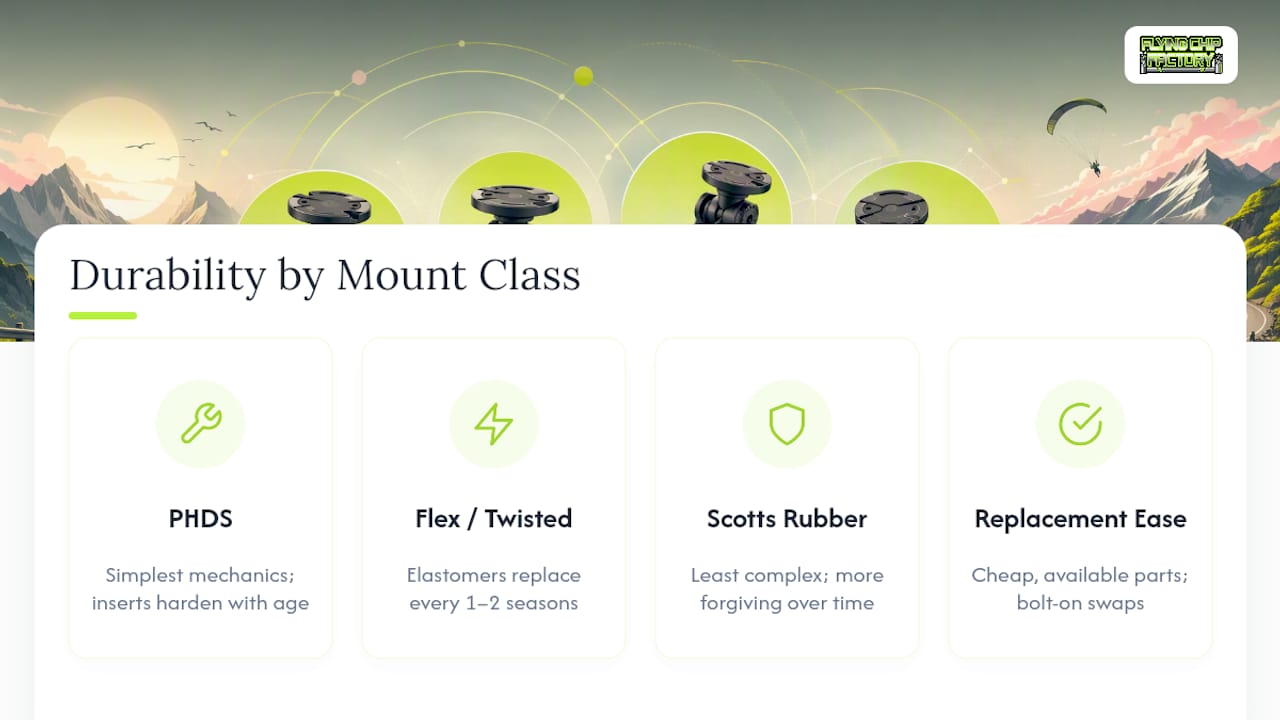
Flex bars and Twisted Engineering systems put more stress on a defined flex point, and that's where you'll see wear first. Riders who log serious hours off-road report needing to replace elastomers on these systems every one to two riding seasons depending on terrain severity, though harder use naturally shortens that window. The upside is that replacement is usually a bolt-on job, not a full teardown.
Scotts Rubber Mount, being the least complex of the group, tends to be the most forgiving over time simply because there's less to fail. But it's also giving up the most damping performance to get there, so "durable" doesn't necessarily mean "still solving your original problem" three seasons in.
The honest answer is that every rubber or elastomer component degrades eventually. The systems that hold their character longest are the ones where replacement parts are cheap, available, and easy to swap without disassembling half the cockpit. That's worth weighing more heavily than any marketing claim about damping percentage.
What Riders Actually Say After Living With These Mounts
Forum feedback tends to be more useful than manufacturer copy here, because riders report what breaks, what wears out, and what actually changes on the trail rather than what a spec sheet promises.
Long-running rider threads comparing these mounts head-to-head describe price parity across most of the flex-bar and 360-degree options, generally landing riders in a similar overall spending range regardless of which one they pick. That means the decision usually comes down to feel and maintenance preference rather than cost.
Consistent themes show up across independent reviews too. Magazine testing of bar mount systems notes that PHDS delivers a noticeably softer ride than stock without the bulk of flex bars, which matches what forum riders report. Flex bar owners consistently mention the learning curve. It takes a few rides to stop noticing the flex point and start trusting it. Riders switching from a rigid setup often describe the first ride as "vague" before their hands adjust to reading feedback through a mount that moves.
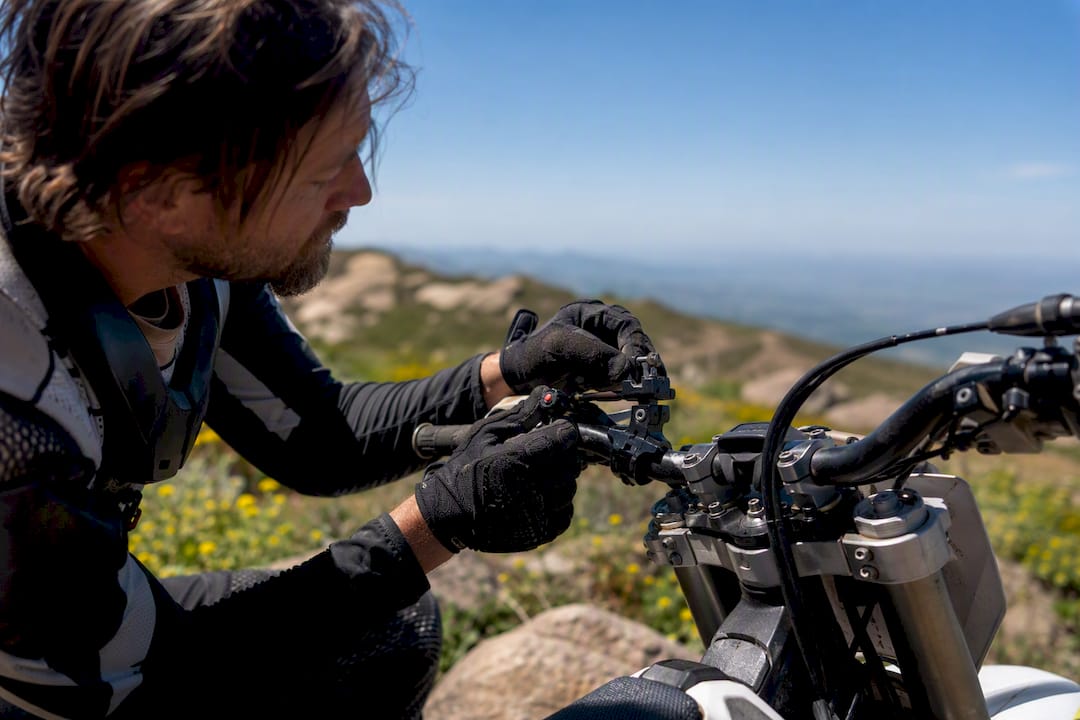
Scotts Rubber Mount owners report the fewest complaints simply because expectations are set correctly going in. Nobody buys a rubber mount expecting flex-bar levels of compliance, so satisfaction tends to track closely with realistic expectations rather than disappointed ones.
Does Your Bike and Bar Setup Actually Fit These Mounts?
Compatibility depends on three things: bar diameter, clamp style, and whether you're running a steering stabilizer. Most of these systems are designed around common triple clamp dimensions found on KTM, Husqvarna, GASGAS, Yamaha, and Honda off-road models, but fitment charts vary by brand and model year, so don't assume a universal fit.
PHDS mounts, because they work with your existing standard handlebars, tend to have the broadest compatibility across brands. You're not committing to a specific bar shape or bend, just adding an isolation layer beneath whatever bars you already run.
Flex bars and Twisted Engineering systems replace the handlebar entirely, which means you're choosing a specific bend and rise that has to work with your existing triple clamp and riding position. If you've already dialed in a bar bend you love, switching to a flex system means starting that fit process over.
Scotts Rubber Mount was built with steering stabilizer compatibility as a core design goal, which makes it the more straightforward choice if you're already running a stabilizer and don't want to troubleshoot clearance issues.
Whatever you choose, check the manufacturer's current fitment list against your exact model year before ordering. Triple clamp dimensions shift between generations even within the same model line, and a mount that fit last year's bike doesn't guarantee it fits this year's.
Beyond Vibration: How These Mounts Change Steering Feel
Vibration damping is only half the story. Every one of these systems changes how steering input travels from your hands to the front wheel, and that tradeoff matters as much as comfort does.
Rigid, direct-mounted bars give you the clearest steering feedback, which is exactly what a Mako 360 or flex-bar system trades away in exchange for comfort. Reviews of mounting systems across bike categories consistently find that anything placed between a rigid attachment point and the rider's hands introduces some amount of feedback delay, and handlebar mounts are no exception.
The question is how much delay you can tolerate before it affects your confidence in technical terrain. Flex bars, because their movement is structural and predictable, tend to preserve steering precision better than riders expect once they adjust. PHDS, with its rubber insert design, introduces a small amount of vagueness at the bar itself, which most riders describe as barely noticeable in normal riding but slightly more apparent when pushing hard through technical sections.
Riders who prioritize precision over comfort, like technical single-track specialists, often prefer the Scotts Rubber Mount or a well-tuned flex bar over a full 360-degree elastomer system, simply because less material sits between input and output.
How Long Does Installation Actually Take?
Installation time varies more than most product pages suggest. PHDS is the fastest, typically a straightforward swap that takes under an hour with basic tools since you're keeping your existing bars.
Flex bars and Twisted Engineering systems take longer, usually two to three hours for a first-time install, mostly because you're also relocating controls, cables, and sometimes rerouting brake lines to match the new bar's geometry. Budget extra time if you've never repositioned hand controls before.
Scotts Rubber Mount installs somewhere in between, generally faster than a full bar swap but slightly more involved than PHDS since you're integrating stabilizer hardware alongside the mount itself.
Adjustment time after install matters too. Flex bars with tunable elastomers may need a few rides to find the right durometer for your weight and terrain, and swapping elastomers typically doesn't require full disassembly, just removing the bar clamp. Budget an extra ride or two before you judge whether you've got the setup dialed in.
Which Mount Would I Actually Run on a Long Technical Ride?
For mixed terrain and long days in the saddle, I'd lean toward a 360-degree elastomer system over a pure flex bar. Omnidirectional damping handles the unpredictable side-loading of technical trails better than a mount built mostly for vertical compliance.
That said, no handlebar mount fixes bad suspension. A mount reduces fatigue and takes the edge off chatter, but if your fork and shock are undersprung or poorly valved for your weight, you're masking a bigger problem. Check your suspension tuning fundamentals first, and use the fit guide above once you're ready to dig into installation specifics.
— Drake
Why Riders Are Looking at BDE Bar Mounts
If you've read this far, you already know the tradeoffs: PHDS is cheap but soft on impacts, flex bars add bulk, and rubber mounts sacrifice some steering precision for simplicity. Flying Chip Factory built BDE Bar Mounts to close that gap. It's an isolated 1 1/8 inch handlebar mount system machined to reduce vibration and hard-impact chatter while keeping steering feel tight, not vague.
A few things that matter if you're comparing it against the alternatives above:
- Built for standard 1 1/8 inch motocross bars, so no forced switch to a new bend or rise
- Engineered with the same aluminum tolerance standards Flying Chip Factory applies across its CNC-machined motorcycle parts
- Designed to reduce trail chatter and hard impacts without the cockpit bulk of a full flex-bar setup
Flying Chip Factory machines every part in-house in Athens, Alabama, with direct access to the machinist behind the design, which means fit questions get real answers, not a call center script. Check the BDE Bar Mounts fit details and see if it solves your specific vibration problem before you commit to a bigger, bulkier system.
Sources
- Mako 360 v Flexx v Twisted Engineering v Scotts Rubber Mount | Adventure Rider
- Three Things - Bar Mounts Review | Dirt Rider
- Flexx bars vs mako 360 | ThumperTalk
- MAKO 360 Handle Bar Mounts - Slavens Tested and Approved